It has been ages since I’ve allowed myself to get into another fantasy series. The emptiness I have felt post completing the Harry Potter series and the Hunger Games series and the Kane Chronicles series and the Percy Jackson series made me resent diving into a world with make-believe characters and happy endings. I reluctantly started reading Ben Aaronovitch’s ‘Rivers of London’ series which a kind soul on Reddit assured me was ‘Harry Potter’ for adults, but the investment of time and the foreboding awareness of the subsequent sadness made me give up on the series before I’d even started on my journey.
When I received a review/proof copy of Ordinary Monsters by J.M. Miro, I had quite frankly gotten used to the idea of preferring books from the non-fiction and memoir aisle (the impersonal, no-strings-attached nature of the genres is compelling). I had also got over my irritation with snide comments prevalent on social media stating that not loving fiction is a sign that you’re no an empathetic reader. However, post reading too many non-fiction/work-related books at a stretch, I think I needed an escape from reality for a bit and let myself slowly recover and get my imagination skills back (for those who are new here and unaware, post my CA exams I have been in a severe slump when it comes to reading and imagining fictional worlds). So I’m so glad I got a chance to read and review this book, thank you Bloomsbury for this opportunity!
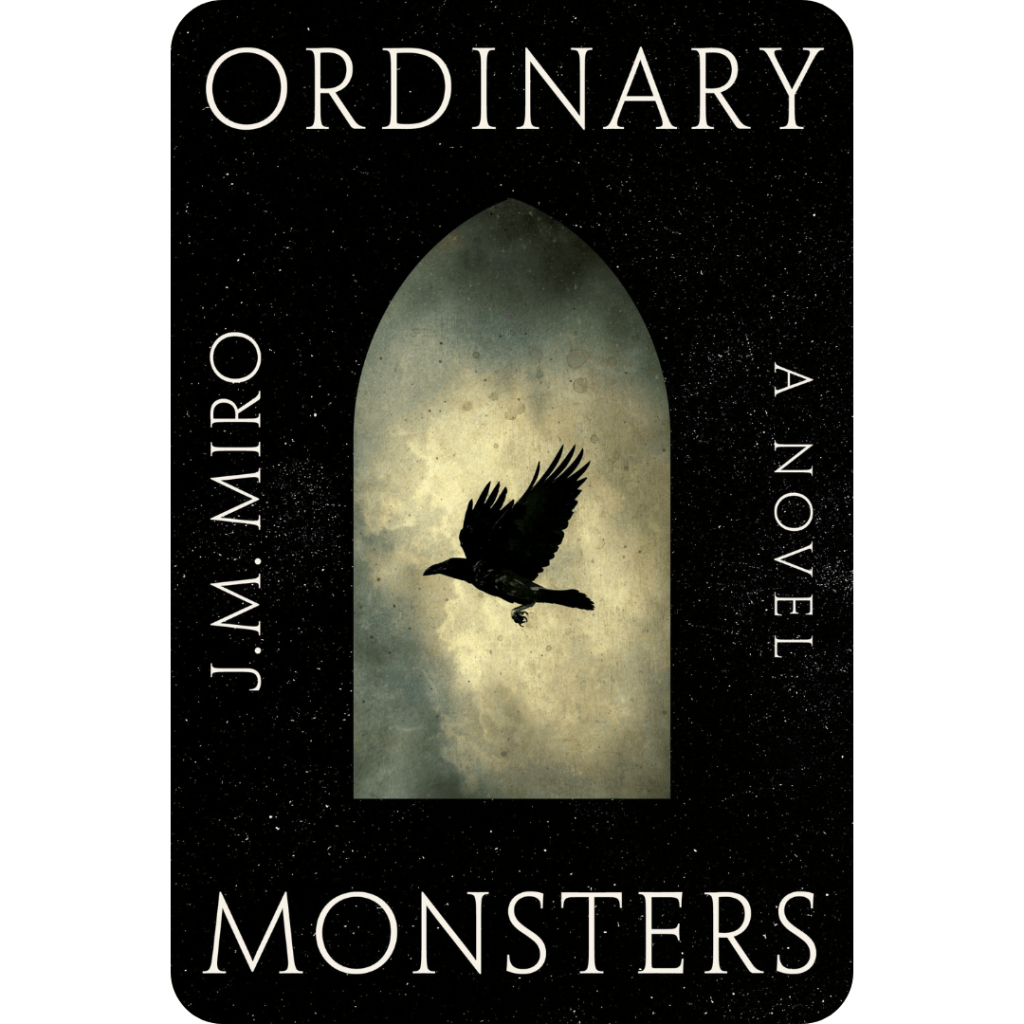
‘Ordinary Monsters’ by J.M. Miro is set in a plethora of locations all over the world – New Orleans, Mississippi, Tokyo, London, Edinburgh and includes a diverse cast of characters. Though the book is majorly set in Victorian England and most of the action takes place in the year 1882, relevant flashbacks weave the parallel stories together and break them apart, leading to a plot design that moves like the double-helix structure of DNA. And yes, it is a historical, urban fantasy.
The ‘witches’ and ‘wizards’ in this book are given a gender-neutral title of ‘Talents’. And unlike typical magic where the only outcome is a good/desired outcome, Miro designs the magical abilities of these Talents on the familiar concept of Maat (order) and Isfet (chaos) from Egyptian mythology. There’s a kid who can heal himself instantly, but still feels the pain of a wound after the bleeding stops and the scar fades away. There’s a kid who can turn invisible, but needs to step in and step out of her clothes in order to be completely invisible (unlike common depictions of invisibility where you are entirely invisible once you say a spell, or devices used to dispose off the necessity of not wearing clothes (yes, invisibility cloak, I’m talking about you).
In a vibe similar to ‘Miss Peregrine’s Home for Peculiar Children’, there is a home for these Talents, Cairndale Institute, run by Dr. Berghast and Mrs. Harrogate. Here, the Talents are located from all over the world, rescued from the ill-fated life these misunderstood ‘monsters’ normally live (because of their ‘abnormalities’ and eerily-common loss of parents at an early age) by private detectives, and taught how to develop their abilities and hone them in a safe manner. We follow the stories of Marlowe and Charlie closely in the initial chapters, and then we learn about Komako, Teshi and Ribs, all the while marveling at the burden these young shoulders carry, as we read their encounters with a Talent gone astray, a man with a black coat that seems to be smoking and made of black dust and his semi-human minion(s).
The narrative style of the book is easy to read with detailed story-telling that leaves little to be filled in by the imagination of a young reader. The auditory and olfactory descriptions of the various locations and characters is surely a treat, as it allows the reader to completely immerse themselves in the book. Though I did feel some of the descriptions were overdone and unnecessarily repeated too many times in the book (for example, the reader is being constantly reminded that a particular detective is wearing an ‘oilskin’ cloak whenever the said detective reaches out for her revolver), but there’s nothing to really complain about too much.
One thing that really impressed me is the way Miro has inter-weaved so many characters and underlying concepts in a seamless manner. To give a spoiler-free example, Miro also includes older Talents into the story, and gives a glimpse of what life is like for them if they don’t retain their skills. Which I think is pretty phenomenal, as most fantasy books tend to gloss over the fact that redundancy in skills can and may happen even in a magical setting (cue Dumbledore being old as an oak and being ‘the only wizard Voldemort truly feared’).
Another unique thing about this book is this idea that starts from the very beginning itself: Not every monster is entirely cruel, and not every hero is free of shades of gray. In other fantasy series I’ve read, the distinction between good and evil was clear from the very beginning, and you were either a good person who was going to save the world, or you were a bad person who was hellbent on destroying it. However, the story-telling of the author constantly makes you wonder about who’s actually concerned about taking care of the Talents, and who’s trying to dominate the world, and your perspective keeps shifting based on the additional information you get while reading the book. Bringing this out in the form of a story for kids may seem grim, but it does really drive home an important message: the need to know more about a person before bucketing them into the good/bad category, and the art of being discerning when it comes to people who ought to protect you and the people you trust.
While this book was a bit of a heavy read (around 660 pages), and is the first of a trilogy, I can’t wait to see what’s in store for the future of these beautifully tragic kids. The book does end at a cliffhanger, obviously, and let’s hope the second and third book get published soon!

 Mithila Menezes
Leave a comment