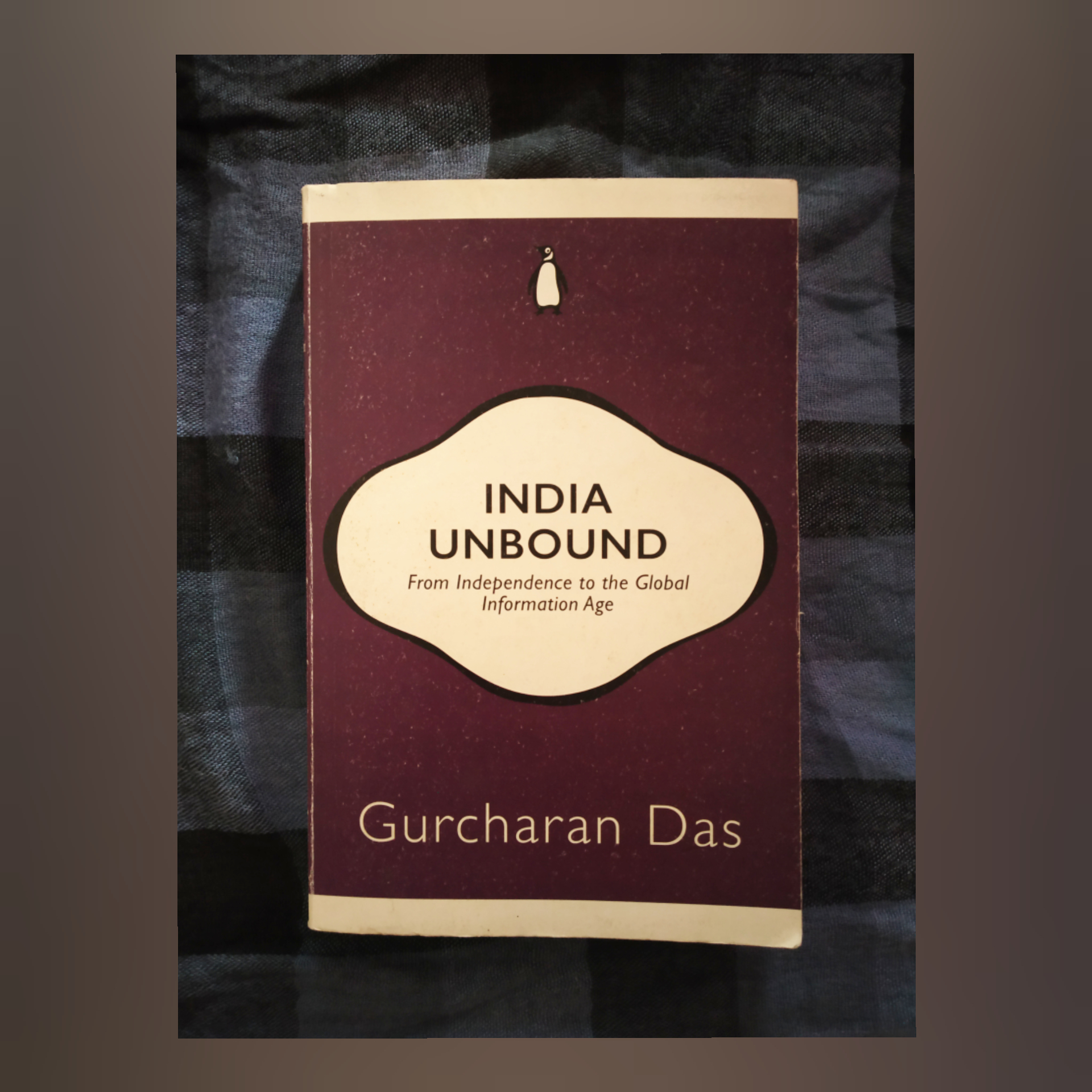
The whole title of this book is “India Unbound: From Independence to the Global Information Age”, and true to its title, it does stick to that and much more. The much more bit refers to the memoir-like story of the author’s own life – his schooling, graduation from Harvard, his first job at Vicks VapoRub, his role at Richardson Hindustan Limited and his role as the CEO of Procter & Gamble India. He also speaks of his post-retirement phase of being a Director on boards of various company and being a part of Chrysalis Capital Fund as their Chairman and Adviser.
As a student of commerce, I felt a lack of good syllabi for the subject of economics. More specifically, we do learn about micro-economics at the junior college phase and macro-economics in the undergrad years, but there is no definitive textbook that speaks about the intersection of economics with politics and the actual history of India. India Unbound fills that gap from an academic point of view. The book opened my eyes about the factual history of the various economic policies that Indians have borne witness to, at the hands of post-Independence politicians who clearly had no idea about economics, beyond how it would help to grow their vote bank. This book did provide me with an important barometer for deciding what is best for our country – education and a functioning synergy between democracy and capitalism and of course, the lack of bureaucracy.
Let me take you through the book chapter by chapter –
The first chapter is an introduction to the author’s childhood and his family and also the history of India, in the post-independence and pre-independence period. It also provides foreshadowing to the author’s criticisms of Nehru’s policies and managerial skills and the greater role of education as compared to any other reform policy.
The author then goes on to explain about the entry of Robert Clive and the East India Company and the story of how GD Birla’s family emerged from the two World Wars with successful businesses (note: there was no cheating involved, and only pure economics helped them). The various other stories shared in this book are – how the foundations of the Indian Railways were built, the battle between Alexander the Great and Porus, the inefficiences of handing-down family run businesses to inept children, the role of spirituality in the lives of business leaders, and how India can benefit from information technology by making it its core competency.
From an economic policy perspective, the author gives us entry to the backstage where the greatest influences of the country planned and came up with economic policies for the country. The author unreservedly bashes the policies of Jawaharlal Nehru, talks about Mahatma Gandhi’s ideas for self-sufficient villages, the Five Year Plans drafted by P.C. Mahalanobis, the rise of the License Raj thanks to the inefficiencies of bureaucracy, Lal Bahadur Shastri’s attempts at reviving a famine-prone country by the introduction of the Green Revolution, whether the “garibi hatao” campaign of Indira Gandhi did more harm or good to the economy and the team effort of Narasimha Rao, Dr. Manmohan Singh, Montek Singh Ahluwalia and P. Chidambaram in bringing about India’s true economic independence in 1991. There are various references to Asian Tigers like China and Japan, Hongkong, Taiwan in a bid to draw a comparative analysis of the India we are now versus the India we could have been. The author also tries to draw examples of economically successful communities like Marwaris and the Japanese communities and explains why they got to where they are currently. The businessmen spoken about in this book are Kasturbhai Lalbhai, Aditya Birla, Dhirubhai Ambani, Sam Pitroda, Subhash Chandra, R. Subramanium, Abhijit Sen and many more local entrepreneurs whom the author met in his journeys across India.
Various questions that the author addresses in this book are:
- Did the British empoverish or enrich India while they ruled us?
- Were Nehru’s policies helpful or harmful for the blossoming, independent Indian economy?
- The issue of planning for growth versus leaving the market to fend for itself
- Socialism vs Capitalism
- Distribution of Wealth vs Creation of Wealth
- Whether India can successfully ride the wave of the information technology boom
This book was written at the turn of the 21st century, and does not factor in latest developments in economy and politics. There is an afterword to the book written by the author in 2007 that I’m yet to read, but a glance of it merely suggests similar ideas of education and information technology being the next big thing that could potentially elevate the status of India as an economy.
The thoughts in this book should be separated from political ideology, that of the author or the reader’s, in order to fully appreciate the theories of macro-economics presented in the book. While I do understand that politics influences economics and vice versa, the fact does remain that the author is critical of policies of the government which were detrimental to the economy of India, irrespective of which party the economic policies stemmed from.
t/w: The author shares an anti-reservation stance in the tenth chapter titled Caste. His view is that instead of reservations, education is a greater tool towards bringing about equality among all Indians, as quotas end up being political bargaining chips and don’t really end up providing any tangible economic development to people from lower castes. An example:
But as the lower castes begin to realise that the better jobs are in the private sector rather than in the government, they will turn, one hopes, to education rather than to reservations.
Gurcharan Das, India Unbound
To summarise, I would state that this book is only a beginning step for a student of Indian economics. It is a comprehensive summary and offers shooting-off points to various authors that you must read as well. Do not subscribe wholeheartedly and immediately to the POV shared by the author, before you have the chance to read more and read vastly across authors and varying perspectives.


Leave a Reply